Moving from Ohio to Florida is straightforward for most families, and it typically costs between $600 for a DIY rental truck and $9,500 for a full-service move of a three-bedroom home. They can connect you with moving companies to handle the heavy lifting, but your top priorities on arrival are fixed by law: a Florida driver license within 30 days, vehicle registration within 10 days, and a homestead exemption filing by March 1 if you want the tax break that year.
TL;DR:
- Moving costs vary widely: DIY rental trucks cost $600–$2,000, containers are mid-range, and full-service moves for a three-bedroom home typically range from $3,000 to $9,500.
- Booking summer or end-of-month moves requires 8 to 12 weeks' notice due to high prices and limited availability.
- Completing Florida legal requirements involves getting a driver license within 30 days, vehicle registration within 10 days, and filing for homestead exemption by March 1.
- Moving timelines should start 8 to 12 weeks before your move date, with careful planning around travel routes and overnight stops along I-75.
- Hiring a professional moving service is recommended for households with specialty items or busy schedules, with transparent estimates and written agreements being essential.
Table of Contents
- Cost and Timing: What You'll Actually Pay and When
- What Does a Realistic Ohio-to-Florida Timeline Look Like?
- What Legal Steps Do You Need to Complete in Florida?
- Packing, Shipment Options, and Move-Day Details You Can't Skip
- Moving With Kids and Pets: What to Prepare
- How Do You Choose the Right Moving Approach?
- What's the Real Total Cost, Including the Fees Nobody Mentions?
- Should You Drive Your Car or Ship It?
- Handling Utilities: Shutting Off in Ohio, Turning On in Florida
- Your Pre-Move Paperwork Checklist
- Finding Housing in Florida Before You Arrive
- What I've Learned Helping Families Move From Ohio to Florida
- Let Value Added Moving Handle Ohio to Florida So You Don't Have To
- Where to Verify These Details Yourself
- Sources
- FAQ
Cost and Timing: What You'll Actually Pay and When
The price tag on your move depends almost entirely on how much you're willing to do yourself. A rental truck for a modest household typically runs a few hundred to a couple thousand dollars in fuel and equipment, but you're driving roughly 1,000 miles and unloading it yourself. A moving container splits the difference, giving you a middle-ground price without the full crew. Full-service movers, where a crew packs, loads, drives, and unpacks for you, land in a broader range.
- DIY rental truck: $600–$2,000 for most one to two bedroom loads
- Moving container: Mid-range pricing, no driving required
- Full-service move: Roughly $3,000 to $9,500 for a three-bedroom home, depending on weight and service level
Quick Fact: Summer and end-of-month moves carry the highest prices and the tightest availability, often requiring you to book 8 to 12 weeks ahead just to lock in a date.
Beyond home size, three factors swing your quote the most: total shipment weight, whether your old or new address requires a shuttle or long carry (think narrow streets or no truck access), and the season you move in. Booking mid-month in spring or fall, rather than the last week of summer, is one of the simplest ways to shave real dollars off your bill.
What Does a Realistic Ohio-to-Florida Timeline Look Like?
A move this size runs cleanly when you work backward from your target date. Here's the schedule that keeps most families from scrambling in the final week.
- 8 to 12 weeks out: Request written estimates from multiple movers, ideally with a virtual or in-home walkthrough for accuracy.
- 4 to 6 weeks out: Confirm your booking, lock the delivery window, and start using your moving checklist to track paperwork.
- 1 to 2 weeks out: Finish packing non-essentials, confirm arrival logistics with your mover, and pack a "first night" box separately.
The drive itself covers roughly 1,000 miles along the I-75 corridor, with Atlanta as the predictable traffic chokepoint to plan around, especially during weekday rush hours. If you're driving yourself, expect one to three days depending on stops. Full-service consolidated shipments often quote a delivery window of several days rather than a single date, since your load may share space with other customers' shipments.
Pro Tip: Book lodging near Knoxville or Valdosta as a fallback overnight stop. Both sit close to the I-75 route and give you flexibility if road conditions or fatigue push your schedule back a few hours.
What Legal Steps Do You Need to Complete in Florida?
Florida gives you a firm window to get square with the state once you've established residency, whether that's through a new job, school enrollment, or simply living there more than six consecutive months.
- Driver license: Required within 30 days of establishing residency, per the Florida Department of Highway Safety and Motor Vehicles.
- Vehicle title and registration: Due within 10 days of the same residency trigger, and you'll need proof of Florida auto insurance to complete it.
- Homestead exemption: File Form DR-501 with your county property appraiser by March 1 of the year you establish permanent residence to potentially reduce your home's taxable value by up to $50,000.
- Save Our Homes portability: If you owned a homesteaded property elsewhere in Florida before, ask your county appraiser about transferring accumulated tax savings to your new home.
Bring proof of identity, your current title, and your new Florida insurance card. Each county appraiser's office publishes its own filing instructions, so check yours directly before the deadline.
Packing, Shipment Options, and Move-Day Details You Can't Skip
Each moving option trades cost for convenience. A rental truck saves the most money but puts the physical labor and the 1,000 mile drive on you. A container costs more but removes the driving. Full-service movers cost the most but hand off nearly everything, from wrapping furniture to unloading boxes.
- Rental truck: cheapest, most labor, full schedule control
- Moving container: moderate cost, no driving, flexible loading pace
- Full-service: highest cost, least effort, professional handling of fragile items
Quick Fact: Many condo associations and HOAs require a Certificate of Insurance from your mover along with a scheduled move-in slot, and skipping that step can get your truck turned away at the gate.
Before locking in a moving date, call your new building or HOA to confirm their COI and scheduling requirements. On the insurance side, Florida requires proof of coverage that meets state PIP and PDL minimums to register your car, but those minimums leave real gaps. Given Florida's high rate of uninsured drivers, adding uninsured/underinsured motorist coverage is worth the extra premium. Always verify your mover's credentials through the FMCSA SAFER database before signing anything.
Pro Tip: Call your HOA or condo board the same week you book your mover, not the week of your move. Some buildings need five to seven business days' notice to schedule a loading dock or freight elevator.
Moving With Kids and Pets: What to Prepare
Relocating with a family adds a layer of paperwork most single movers never think about, but a little advance planning keeps enrollment and vet visits from becoming last-minute fire drills.
- Request school records early. Ohio schools typically release transcripts and immunization records within a few business days of a written request, and Florida schools will need them to enroll your child, which also serves as evidence of your new residency.
- Update pet records before you leave. Florida requires proof of rabies vaccination for pets, so get your vet records copied and carry them in the car rather than the moving truck.
- Pack an essentials box separately. Keep medical records, school transcripts, prescriptions, and a list of key contact numbers in a folder that travels with you, not in the shipment. Our checklist for moving with kids and pets breaks this down room by room.
Long drives go smoother with frequent stops for pets and scheduled breaks for kids. Building 30 minutes of slack into each day of driving prevents small delays from snowballing.
How Do You Choose the Right Moving Approach?
Your decision comes down to four questions: What's your budget? How large is your household? Does either address have access constraints like stairs or no truck parking? And how much physical labor are you actually willing to do?
Once you've narrowed your options, get everything in writing. Ask every mover for:
- Their USDOT number, verifiable on the FMCSA database
- A binding estimate, not a "not to exceed" guess
- Written confirmation of whether shuttle, fuel, or access fees are included
- Proof of cargo insurance coverage
- A specific delivery window, not a vague "sometime that week"
Pro Tip: A mover who won't give you a written binding estimate after a virtual walkthrough is a red flag worth walking away from. Their pre-screening and negotiation process aims to filter out vague pricing before it reaches you, and a dedicated move coordinator keeps one person accountable for your quote from start to finish.
What's the Real Total Cost, Including the Fees Nobody Mentions?
The quoted price on your estimate is rarely the number you actually pay. Deposits, insurance add ons, and day-of tips all stack on top of the base rate, and skipping them in your budget is how a "$4,000 move" turns into a $4,800 bill.
Most full-service movers ask for a deposit of 10% to 25% of the total estimate to hold your date, refundable under most cancellation policies if you give enough notice. Basic valuation coverage is usually included, but it only covers pennies on the dollar per pound of damaged goods. Full replacement value protection costs more but actually covers what your belongings are worth, and it's worth the extra line item for anything irreplaceable.
Here's what tends to get left off a rough estimate:
- Deposit: 10% to 25% of total estimate, paid at booking
- Full-value insurance upgrade: An added percentage of your shipment's declared value
- Access or shuttle fees: Charged when a truck can't park directly at your door
- Long-carry fees: Applied when the crew has to walk items a significant distance from truck to door
- Tips: Customary for moving crews, typically $20 to $50 per mover for a full day's work
- Temporary storage: If your Florida closing date lands after your Ohio move-out date
Ask your mover to itemize every one of these before you sign. A binding estimate that names each potential fee up front is the clearest sign you're dealing with a legitimate operation rather than one banking on add-ons after your belongings are already on the truck.
Should You Drive Your Car or Ship It?
Driving your own car down is free beyond gas and tolls, and it's the default choice for most Ohio to Florida movers since the trip is a manageable one to two days behind the wheel. It also means your vehicle arrives exactly when you do, which matters if you need a car immediately for work or school drop-offs.
Vehicle transport services make more sense in a few specific situations. If you're moving multiple vehicles and don't have enough drivers, shipping the second or third car on a carrier avoids paying for extra flights or asking family to drive it for you. It also helps if you're flying to Florida rather than driving the 1,000-mile route yourself, or if the vehicle isn't reliable enough for a long highway trip.
Open-air carriers are the standard and most affordable option, while enclosed transport costs more and suits classic cars, motorcycles, or anything you'd rather not expose to highway debris. Get a firm pickup and delivery window in writing, since transport companies often quote a range of several days rather than a fixed date, similar to consolidated household goods shipments.

Whichever option you choose, don't register your car in Florida until you've decided. If you're shipping it and driving a rental down instead, keep your Ohio registration and insurance active until the vehicle physically arrives and you're ready to complete Florida's 10-day registration window.
Handling Utilities: Shutting Off in Ohio, Turning On in Florida
Utility transitions are one of the easiest things to forget until you're standing in a dark new house. Start canceling Ohio services about a week before your move-out date, timed to your actual departure rather than your closing date, so you're not paying for two homes at once.
Contact these providers in Ohio to schedule disconnection:
- Electric and gas company
- Water and sewer utility
- Internet and cable provider
- Trash and recycling service
In Florida, set up new service two to three weeks before your arrival date whenever possible, since some providers, especially internet companies, need a scheduling window to send a technician. Electric and water utilities in most Florida counties can typically activate service within a day or two of your move-in date, but don't count on same-day setup during peak summer relocation season when call volumes spike.
Keep your final Ohio utility bills. You'll want proof of a paid-in-full account if a deposit refund is owed to you, and some Florida providers ask for a previous utility payment history to waive a new deposit.
Your Pre-Move Paperwork Checklist
Getting your documents organized before moving day prevents the single most common relocation headache: standing at a Florida DMV counter without the one form you needed.
Gather these before your moving date:
- Change of address: File with the USPS, and update it separately with your bank, employer, and any subscription services
- Medical records: Request copies from your Ohio doctors, dentists, and specialists, plus a list of current prescriptions
- School records: Ask your Ohio school district for transcripts, immunization records, and IEP documentation if applicable
- Vehicle documents: Current title, registration, and proof of Florida insurance
- Utility final statements: Keep copies for deposit refunds and new-account setup
- Voter registration: Update through Florida's Division of Elections once you've moved
- Insurance policies: Homeowners or renters insurance for your new address, plus updated auto coverage
Store everything in one physical folder that travels with you in the car, not in the moving truck. Losing access to your documents for a week while they're in transit is a bad time to discover you need your child's immunization record for school enrollment.
Finding Housing in Florida Before You Arrive
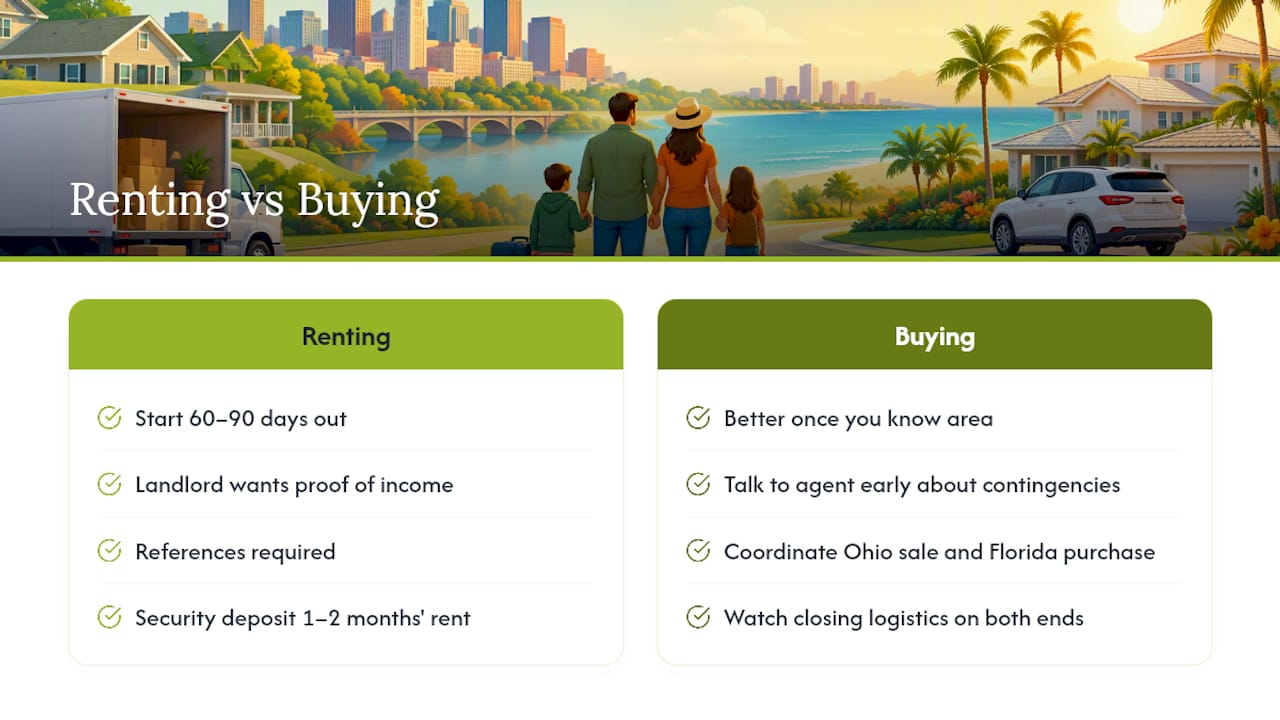
Renting first is the move most relocation guides underweight, and for good reason: it lets you test a neighborhood's flood insurance costs, HOA culture, and hurricane-season quirks before committing to a mortgage. A short vacation rental or a scouting trip rarely reveals what a full rainy season does to a neighborhood.
If you're renting, start your search 60 to 90 days out. Florida's rental market moves fast in popular metro areas, and landlords typically want proof of income, references, and a security deposit equal to one to two months' rent. Virtual tours have become standard, so you can realistically sign a lease before you ever set foot in the state.
Buying works better once you know the area, but if your Ohio home sale and Florida purchase need to happen close together, talk to a real estate agent early about contingency timing. If you're selling property in Ohio or navigating closing logistics on either end, resources like this closing cost guide walk through what sellers typically owe at the table.
Whichever path you choose, get flood zone information for any specific address before signing. Florida flood insurance costs vary enormously by elevation and proximity to water, even within the same zip code.
What I've Learned Helping Families Move From Ohio to Florida
Renting for the first six to twelve months is the single best piece of advice I give hesitant movers, since it exposes flood insurance costs and HOA quirks that a weekend visit never will. Hurricane season, June through November, also means insurance quotes swing more than newcomers expect. Close on a home in October, and you may pay meaningfully more than you would in February.
— Victor
Let Value Added Moving Handle Ohio to Florida So You Don't Have To
This service exists for readers who don't want to manage all of this themselves. Rather than calling multiple moving companies and comparing different estimate formats, you work with one dedicated move coordinator who negotiates quotes on your behalf and helps keep pricing transparent from the first call to the final delivery.

This service fits busy families juggling school enrollment and job start dates, anyone doing a long-distance move who wants a hands-off experience, and households with specialty items like pianos or fine art that need extra care in transit. Before requesting a quote, have your move date, approximate home size, and any access constraints (stairs, no truck parking, HOA rules) ready to share. Head to Value Added Moving to get matched with a pre-screened mover and see what your Ohio to Florida move actually costs.
Where to Verify These Details Yourself
Confirm license and registration deadlines directly with FLHSMV, check homestead exemption rules through your county's Florida Department of Revenue page, and verify any mover's authority through the FMCSA before signing a contract.
Sources
- New Resident - Welcome to Florida! - Florida Department of Highway Safety and Motor Vehicles
- Property Tax - Taxpayers - Exemptions | Florida Department of Revenue
- Moving From Ohio to Florida: Cost (2026) | MovingRated
- Cost to move from Ohio to Florida (2026) | GoodMigrations
FAQ
How much does it cost to move from Ohio to Florida?
A DIY rental truck typically runs $600 to $2,000, while a full-service move for a three-bedroom home falls between roughly $3,000 and $9,500. Moving containers land in between, depending on shipment weight and season.
How long does the drive from Ohio to Florida take?
The route covers roughly 1,000 miles along I-75, typically one to three days if you're driving yourself. Full-service consolidated shipments often quote a multi-day delivery window instead of a fixed date.
How soon do I need a Florida driver's license after moving?
Florida requires new residents to obtain a Florida driver license within 30 days of establishing residency, and to title and register vehicles within 10 days of that same trigger.
When is the homestead exemption deadline in Florida?
You must file Form DR-501 with your county property appraiser by March 1 of the year you establish permanent residence to qualify for that tax year's exemption, which can reduce taxable value by up to $50,000.
What does Value Added Moving charge for an Ohio to Florida move?
Pricing depends on your home size, distance, and service level, so current quotes are available directly through Value Added Moving rather than a fixed published rate. Their coordinators negotiate competitive quotes and provide transparent pricing once they know your specific move details.