If you're leaving New York for Florida, pick your mover type based on what you value most: full-service for predictability, a container for a budget middle ground, or a rental truck if cash matters more than convenience. Book between October and April to dodge hurricane season and peak pricing, and start requesting itemized, binding quotes now. Whichever route you choose, get the paperwork locked before your lease notice deadline hits.
TL;DR:
- Moving during the off-peak season from October to April helps avoid hurricane delays and reduces costs by 15 to 25 percent compared to summer.
- A full-service move for a three-bedroom home costs between $2,756 and $5,913, depending on season, distance, and extra services like packing or storage.
- Booking mid-week and mid-month can save money and increase scheduling flexibility, especially outside peak demand periods.
- Accurate quotes require detailed inventories, site access information, and requests for binding, itemized estimates with a fixed delivery window.
- Moving a family or fragile items over 1,150 miles is safer and less stressful with professional movers rather than DIY rental trucks due to reduced risk of damage and schedule slippage.
Table of Contents
- Moving From New York to Florida: Your Pre-Departure Checklist
- When Should You Move From New York to Florida, and What Will It Cost?
- How Do You Get Accurate Quotes and Vet a Mover?
- Your 8-Week Countdown From Booking to Unpacking
- What Should You Handle First After Arriving in Florida?
- Is a Broker or DIY Move the Smarter Call?
- Let Value Added Moving Handle the New York to Florida Logistics
- Sources
- FAQ
Moving From New York to Florida: Your Pre-Departure Checklist
Getting out of a New York apartment or house cleanly is half the battle, and the deadlines sneak up fast. Most NYC buildings require 30 to 90 days' written notice before move-out, and many demand a certificate of insurance (COI) from your moving company before they'll even reserve the freight elevator. Call your building manager in the first week of planning, not the last.
Work through these tasks roughly in this order:
- Confirm your lease end date or closing date, then request freight elevator time and submit the building's COI requirement to your mover.
- Declutter room by room. Every box you don't ship is money saved on a per-pound, long-distance quote.
- Build a written inventory, room by room, noting furniture condition and estimated value for insurance purposes.
- Separate high-value items (jewelry, documents, prescriptions, laptops) to travel with you, not on the truck.
- Forward your mail through USPS, cancel or transfer utilities, and notify your renters or homeowners insurance carrier.
A few smaller items matter more than people expect:
- Photograph electronics and artwork before packing, in case you need to file a damage claim later.
- Keep passports, birth certificates, and school records in a single folder you carry personally.
- Schedule your final trash and recycling pickup so you're not stuck hauling bags to the curb on move-out day.
When Should You Move From New York to Florida, and What Will It Cost?
October through April is the window movers themselves recommend, and for two solid reasons. Hurricane season in Florida runs through November 30, and moving outside that window avoids both storm risk and the routine delays it causes on southern routes. Summer is also peak moving season nationwide, which pushes prices up 15 to 25 percent compared with the rest of the year.
Typical cost ranges for a New York to Florida move (roughly 1,150 miles):
- Full-service movers, 2 to 3 bedroom home: $2,756 to $5,913
- Portable container service: generally lower than full-service, since you load and unload yourself
- Rental truck (you drive): the cheapest option, but you absorb the labor, fuel, and driving risk
By the Numbers: A 2 to 3 bedroom full-service move from New York to Florida runs $2,756 to $5,913, with pricing driven by home size, distance, season, and add-on services like packing or storage.
Booking during the last week of the month, on a weekend, or in August will cost more and limit your date options, since that's when demand peaks nationally. Mid-week, mid-month pickups tend to be both cheaper and easier to schedule.
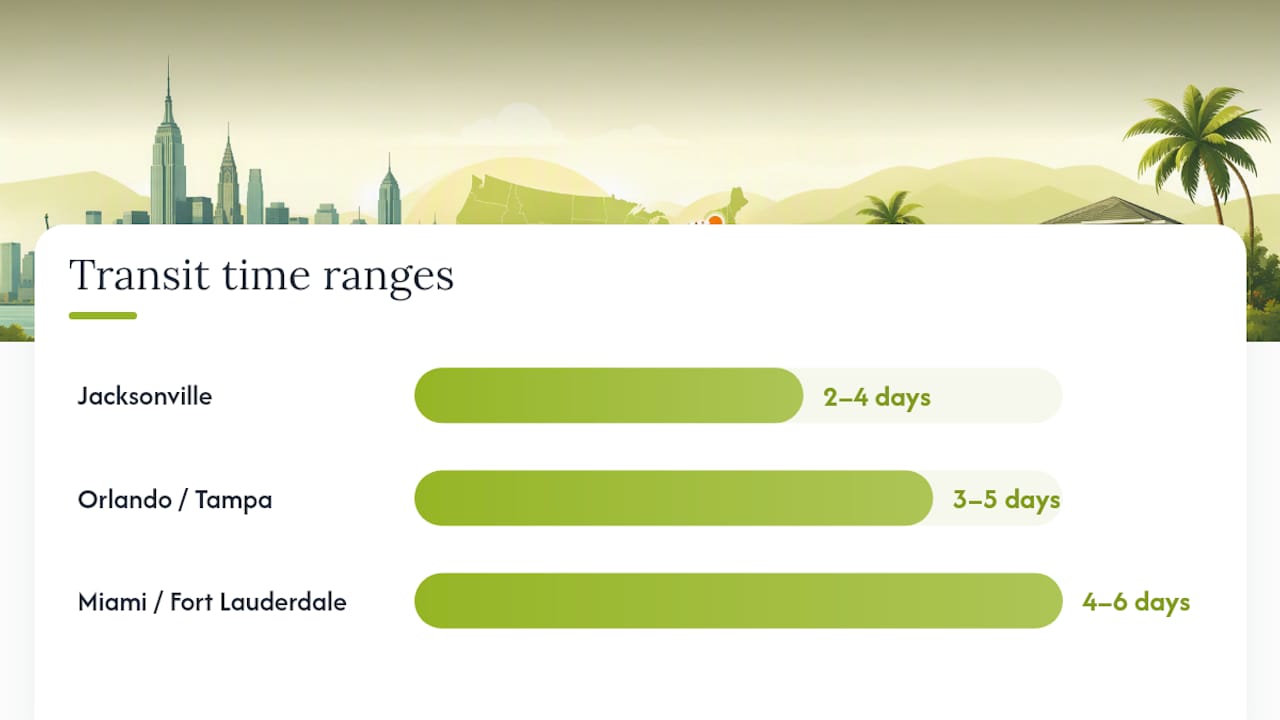
Transit time varies by where you're landing. Jacksonville typically sees 2 to 4 days in transit, Orlando and Tampa run 3 to 5 days, and South Florida destinations like Miami or Fort Lauderdale can take 4 to 6 days. Consolidated shipments (where your goods share a truck with other customers) are the most common cause of delays beyond that window, since your delivery order can shift depending on other stops.
How Do You Get Accurate Quotes and Vet a Mover?
An accurate quote depends on what you tell the mover, not just who you call. Give every company the same details: origin and destination addresses, a full inventory, stairs or elevator access at both ends, your preferred pickup window, and any specialty items like a piano or gun safe.
Once quotes come in, here's what separates a trustworthy estimate from a guess:
- Ask for a binding or not-to-exceed estimate, not a rough phone quote. This protects you from surprise charges if your inventory matches what you disclosed.
- Get an itemized breakdown covering packing, stair carries, shuttle service, and storage, so you know exactly what's driving the price.
- Get a written delivery window in the contract, not a verbal promise.
- Verify the company's USDOT number through the Federal Motor Carrier Safety Administration, and confirm whether you're dealing with the actual carrier or a broker.
- Ask about valuation coverage (basic liability versus full-value protection) and whether transit insurance is included or optional.
- Request an in-home or video survey rather than a phone estimate based on square footage alone.
Pro Tip: Read reviews for patterns, not perfection. One bad review among hundreds usually means little, but repeated complaints about "the price doubled on moving day" are a red flag worth taking seriously.
This is exactly the gap Value Added Moving is built to close. Instead of calling five companies and comparing five different formats, the long-distance moving service works with pre-screened, licensed movers, negotiates quotes on your behalf, and assigns a single coordinator to answer questions from booking through delivery.
Your 8-Week Countdown From Booking to Unpacking
Long-distance moves go smoother with a schedule you can actually follow, broken into manageable chunks rather than one overwhelming list.
- Weeks 8 to 6: Research mover types, request an in-home or video survey, and reserve your date. Start decluttering rooms you use least.
- Weeks 5 to 3: Lock in your binding quote, begin packing nonessential rooms, and request school and medical records be transferred or copied.
- Weeks 2 to 1: Confirm pickup time and access details with your coordinator, label boxes by room and priority, and gather documents, medications, and valuables into a bag that travels with you.
- Moving week: Supervise loading against your written inventory, keep your essentials bag and paperwork with you, and track your delivery window rather than assuming an exact date.
- First two weeks in Florida: Register your vehicle and get a Florida driver's license, set up electric and internet service, and file your change of address with USPS.
Building slack into weeks 2 through 1 matters more than any other stretch. That's when building access issues, missing COIs, or last-minute inventory changes tend to surface, and a few days of buffer keeps a small problem from becoming a delayed truck.
What Should You Handle First After Arriving in Florida?
Florida gives new residents a limited window to update their legal documents, and skipping this step causes headaches at tax time and at the DMV counter alike. Visit the Florida DHSMV to register your vehicle and swap your New York license for a Florida one, then register to vote if you plan to claim residency for tax purposes.
A few cost items catch New Yorkers off guard:
- Car insurance premiums vary significantly by county, so get Florida quotes before you arrive rather than assuming your New York rate carries over.
- Homeowners insurance tends to run higher here due to hurricane and wind exposure, and flood insurance is usually a separate policy entirely.
- Summer electric bills climb fast once your AC runs constantly, so budget higher than your New York utility average.
- SunPass covers most Florida toll roads, and setting it up before your first highway drive saves you toll-by-plate fees.
Pro Tip: Moving to Florida doesn't automatically end your New York tax obligations. If you work remotely for a New York employer, the state's "convenience of the employer" rule can still tax that income. Talk to a tax professional before assuming a clean break.
Leather furniture and wood pieces need protection too. Heat inside a moving truck can climb well past 100°F on the I-95 corridor in summer, which is one more reason to avoid a summer transit window for anything humidity-sensitive.

Is a Broker or DIY Move the Smarter Call?
Renting a truck makes sense if you're young, mobile, and have little to move. It's the cheapest option on paper, and for a studio apartment's worth of belongings, driving it yourself isn't unreasonable.
The math changes once you're moving a family, a home full of furniture, or anything fragile over 1,150 miles. Professional coordination reduces the two things that actually go wrong on long hauls: scheduling slippage and damage from inexperienced loading. A full-service or container option costs more than a rental truck, but it buys back your time and lowers your risk.
Whichever way you go, don't skip the paperwork. Demand a binding, itemized estimate and a written delivery window every time, no exceptions.
— Victor
Let Value Added Moving Handle the New York to Florida Logistics
One alternative to calling movers one by one and hoping their quotes are comparable is to work with a service that connects you with a network of pre-screened, licensed movers and negotiates quotes on your behalf.
With this service, customers can have a dedicated move coordinator from their first call through delivery, transparent pricing, and binding estimates that can be compared side by side. Such features are particularly helpful on routes with seasonal pricing and long transit windows. The service also supports specialty needs like pet relocation and packing and unpacking to assist families managing multiple priorities.
Start by requesting free, itemized quotes for your New York to Florida move, or read how the booking process works before you commit to a date.
Sources
The figures and timing guidance in this guide draw from a small set of primary sources worth bookmarking as you plan:
- Hurricane Information — City of North Miami
- Moving from New York to Florida (Cost, Movers & Timeline) - Freightwaves Checkpoint
- 2026 Moving from NY to Florida Checklist: Expert Tips & Costs — Shepherd Movers
FAQ
How much does it cost to move from New York to Florida?
A full-service move for a 2 to 3 bedroom home typically runs $2,756 to $5,913, depending on distance within the state, season, and add-on services. Container and rental-truck options generally cost less but require more hands-on work from you.
What is the best time of year to move to Florida?
October through April is the recommended window, since it falls outside hurricane season, which ends November 30, and avoids the 15 to 25 percent price bump of peak summer moving season. Mid-week, mid-month dates within that window tend to be cheapest.
How long does delivery take from New York to Florida?
Transit time depends on your destination: Jacksonville runs 2 to 4 days, Orlando and Tampa run 3 to 5 days, and South Florida can take 4 to 6 days. Consolidated shipments are the most common reason deliveries run past the estimated window.
Should I use a full-service mover, container, or rental truck?
Full-service movers offer the most predictability for larger households and long distances, while containers suit budget-conscious movers who don't want to drive. Rental trucks are cheapest but shift all labor, fuel costs, and driving risk onto you.
Does moving to Florida end my New York state tax obligations?
Not automatically. New York's "convenience of the employer" rule can still tax remote income earned for a New York employer even after you relocate, so it's worth confirming your situation with a tax professional before assuming a clean break.
How does Value Added Moving help with a New York to Florida move?
Value Added Moving connects you with pre-screened, licensed movers, negotiates your quote, and assigns a dedicated coordinator for the entire process. Pricing details and free quotes are available directly on the Value Added Moving website.