
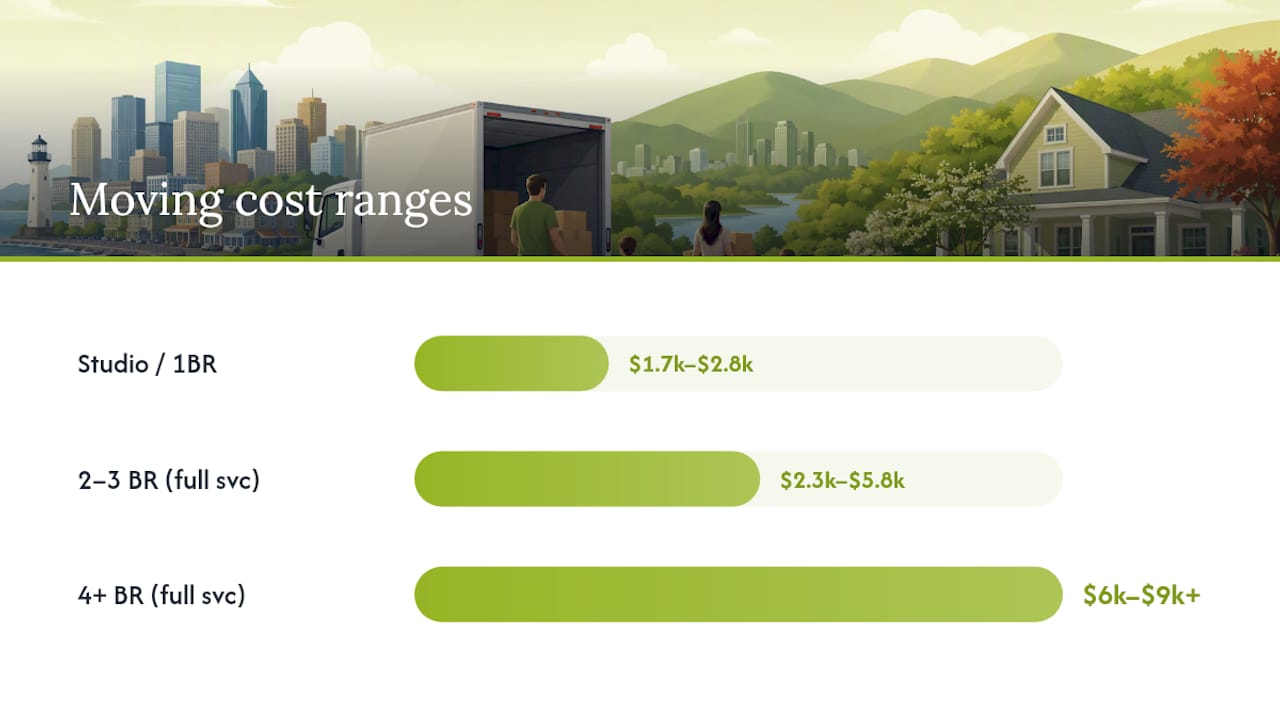
Budget a moderate amount for a studio or 1BR move, and expect higher costs for larger households, with full-service moves for 2 to 3 bedroom homes costing a mid-range amount, and 4+ bedroom moves costing the most for a full-service move from New Jersey to North Carolina. Dedicated service typically delivers in 1 to 4 days, but you should reserve movers 4 to 12 weeks ahead. The moment you arrive, get your North Carolina driver license within 60 days, line up NC insurance, and keep your title and ID within reach.
TL;DR:
- The cost of a move from New Jersey to North Carolina varies widely based on house size, with full-service 2 to 3 bedroom moves averaging $2,250 to $5,750, and larger homes costing $6,000 to $9,000 or more.
- Moving times differ by service type, with dedicated trucks taking 1 to 4 days, while consolidated freight can take 7 to 14 days, often at a lower cost.
- Housing costs are the main factor affecting relocation budgets, with median home values significantly lower in North Carolina, saving families roughly $1,000 a month on rent or mortgage.
- Planning a move over 10 to 12 weeks allows sufficient time for research, estimates, reservations, and settling administrative steps like licensing and vehicle registration.
- Selecting a licensed, verified mover with clear, inventory-based estimates and valuation coverage reduces risks, especially when moving large households or specialty items.
Table of Contents
- What Does It Cost to Move From NJ to NC?
- Where Should You Live in North Carolina?
- What Will Housing and Taxes Cost You in North Carolina?
- What's the Timeline for an Interstate Move?
- What Do You Need to Register a Vehicle in North Carolina?
- How Do You Verify an Interstate Mover?
- Should You Pack Yourself or Hire Full Service?
- Why a Vetted Mover Network Makes This Move Easier
- Do You Need to Update Your Voter Registration?
- How Does Your Tax Filing Change After Leaving New Jersey?
- What Do Families Get Wrong About This Move?
- Get a Transparent Quote for Your NJ to NC Move
- Sources
- FAQ
What Does It Cost to Move From NJ to NC?
Your final bill depends far more on weight and access than on the 478 miles between states. For a route this size, moveBuddha's aggregated quotes put a full-service 2 to 3 bedroom move at roughly $2,250 to $5,750, with dedicated transit windows of one to four days. A studio or 1BR household usually lands closer to $1,700 to $2,800, and a large 4+ bedroom home with a full crew and packing service can run $6,000 to $9,000 or more.
Statistic Callout: Transit time on this route usually comes down to service type. Dedicated trucks (yours only) move in 1 to 4 days. Consolidated freight, where your items share space with other shipments, can stretch to 7 to 14 days but costs noticeably less.
Movers will quote you differently depending on:
- Total shipment weight, not just square footage or bedroom count
- Stairs, long carries from the truck to your door, and whether an elevator reservation is required
- Specialty items like pianos, safes, motorcycles, or gym equipment
- Short-term storage if your NC closing date lands after your NJ move-out date
- Parking and building access restrictions at either address
Rental trucks and portable containers cut costs substantially, often by half or more, but you take on the driving, loading, and schedule risk yourself. Labor-only crews (you drive, they load and unload) split the difference. If you're relocating a large household, have limited vacation time, or simply do not want to drive a 26-foot truck through Virginia, full-service is usually worth the premium. If you're moving light and have flexible dates, using alternative moving methods can help lower your total cost.
Where Should You Live in North Carolina?
North Carolina isn't one housing market. It's several, and picking the wrong one for your priorities matters more than any statewide average. Growth concentrates around specific metros and their suburbs, so county-level data tells a truer story than statewide figures.
- Charlotte anchors banking and corporate jobs, with the state's biggest airport and the most direct commute options.
- Raleigh-Durham (the Triangle) centers on tech, biotech, and higher education, with Research Triangle Park pulling talent from across the country.
- The Triad (Greensboro/Winston-Salem) offers more affordable housing stock and shorter commutes than the bigger metros.
- Asheville trades job density for mountain scenery, arts culture, and outdoor access.
- Wilmington and coastal towns suit retirees and remote workers who want beach life, but come with flood insurance and hurricane exposure to weigh carefully.
Before you commit, check your commute distance, your target school assignment (not just district reputation), local healthcare access, and flood zone status for any specific address. A neighborhood three miles from another can carry a very different insurance bill.
What Will Housing and Taxes Cost You in North Carolina?
Housing, not any single tax line, is the biggest reason families move this route. Census data puts New Jersey's median owner-occupied home value at roughly $454,400 against North Carolina's roughly $288,900. Median monthly owner costs for mortgaged homes run about $2,829 in NJ versus $1,631 in NC, and median gross rent is about $1,720 in NJ versus $1,228 in NC.
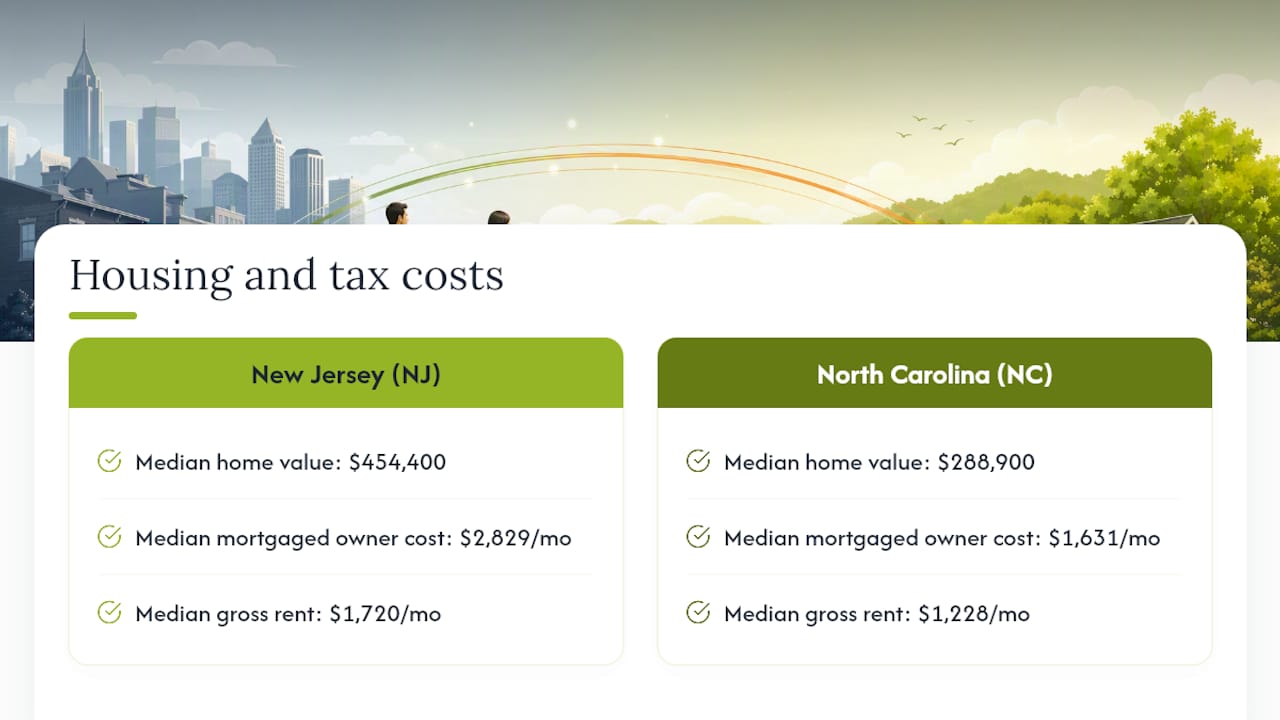
Statistic Callout: That gap, often $1,000 or more a month on rent alone, is usually the single biggest number in your relocation budget. It typically dwarfs any income-tax difference between the two states.
On income tax, North Carolina's Department of Revenue sets the individual rate at 4.25% for taxable years beginning in 2025, dropping to 3.99% for years after 2025, subject to future statutory changes. If you're moving mid-year, you'll likely file a part-year resident return in both states for the transition year. Talk to a tax professional about how to allocate income between NJ and NC, especially if you have investment income, a bonus payout, or remote work tied to a New Jersey employer.
Beyond the headline numbers, check locally for HOA fees (common in newer NC subdivisions), flood insurance premiums near the coast, and toll costs if your commute runs through a managed-lanes corridor in Charlotte or the Triangle.
What's the Timeline for an Interstate Move?
Work backward from your move date, and build in slack for the parts you cannot control, like a mover's confirmed delivery window.
- Weeks 10 to 12: Pick your NC metro, research neighborhoods, and start decluttering.
- Weeks 8 to 10: Build a written inventory and request estimates from several movers.
- Weeks 6 to 8: Reserve your mover. Peak season (late spring through summer) books up fast.
- Weeks 4 to 6: Notify schools, transfer medical records, and schedule utility disconnect/connect dates.
- Weeks 2 to 4: Confirm your delivery window and start packing non-essentials.
- Week 1: Pack an essentials bag, gather your vehicle title and IDs, and confirm mover contact details.
- Move day and arrival: Do a final walkthrough, then start your NCDMV license and registration steps.
Dedicated moves are more predictable than consolidated ones, so if your delivery date is tied to a lease or closing, pay for dedicated service or build a buffer of several days into your plan.
Pro Tip: Keep your vehicle title, driver's license, Social Security card, and any lender paperwork in a folder you carry yourself, not in the moving truck. You'll need it for DMV steps within days of arrival.
What Do You Need to Register a Vehicle in North Carolina?
Sequence matters here. The NCDMV requires new residents who plan to drive in the state to get a North Carolina driver license within 60 days of moving, and you need that license or a temporary certificate before you can title or register a vehicle.
Once you have your license, bring these for registration:
- Your vehicle's title, or lender registration documents if you're financing
- Form MVR-1 (Application for Title)
- Form MVR-180 (Odometer Disclosure) when applicable
- Proof of North Carolina auto insurance
Call your insurer before moving day to confirm they can issue NC coverage effective on your arrival date. A gap in coverage, even for a day, can hold up your registration.
How Do You Verify an Interstate Mover?
Any legitimate interstate carrier or broker should register with the Federal Motor Carrier Safety Administration, and you can verify their USDOT and MC numbers before signing anything. Confirm who the actual carrier is, too. Some brokers subcontract your move to a company you've never heard of.
Before you accept a quote, request:
- A written, inventory-based estimate, not a phone guess based on bedroom count
- Clear labeling of whether the estimate is binding or non-binding
- Valuation coverage terms and the dispute process in writing
Watch for red flags: no DOT or MC number, refusal to put anything in writing, pressure for a large cash deposit, or vague pickup and delivery windows. For a closer look at how to vet a company before you sign, see this New Jersey movers guide.
Pro Tip: Disclose everything upfront: basements, attics, detached garages, gun safes, and anything requiring two people to lift. A mover who quotes you without asking these questions is likely to hit you with a change order on moving day.
Should You Pack Yourself or Hire Full Service?
Your method choice drives both your budget and your calendar. Rental trucks are cheapest but demand your own labor and driving time. Containers cost more but remove the driving. Full-service crews cost the most and save you the most time and physical strain. Labor-only crews sit in between; useful if you already have a truck but not the back for it.
- Pack your own clothes, books, and everyday kitchen items to save money.
- Let professionals pack fragile, high-value, or oddly shaped items like art, mirrors, and electronics.
- Flag stairs, narrow hallways, or elevator reservations when you request quotes. These factors change labor estimates and total price.
Access issues are the most underestimated cost driver on this entire route. A third-floor walk-up in Hoboken versus a ground-level ranch in Cary can shift your quote by hundreds of dollars.
Why a Vetted Mover Network Makes This Move Easier
Coordinating quotes, verifying carriers, and reading valuation fine print takes real time most relocating families don't have. Valueaddedmoving connects customers with pre-screened, licensed, and insured movers nationwide and negotiates competitive, transparent quotes on their behalf. A dedicated move coordinator and an inventory-based binding estimate mean fewer surprises on delivery day, which matters most on a route where consolidated loads can stretch your timeline.
Do You Need to Update Your Voter Registration?
Yes, and North Carolina makes it straightforward. Once you have a permanent NC address, you can register to vote through the state's online portal, by mail, or in person at your county board of elections, and North Carolina allows same-day registration during early voting periods. You'll need proof of your new address, so hold onto a lease, utility bill, or mortgage statement.
Beyond voting, plan for a few other civic updates: register your car and get your NC license (covered above), update your address with the U.S. Postal Service, and notify your county tax office if you'll own property. If you have children, you'll also need to enroll them in your new school district, which typically requires proof of residency and immunization records.
Jury duty eligibility ties to voter and DMV registration in North Carolina, so completing these steps promptly also means you're on the county's radar for jury service, which is a normal part of establishing residency rather than something to avoid. Many counties also require you to register any pets and, if applicable, update your professional licenses (real estate, nursing, contracting) with the relevant NC board before you can legally practice in the state.
None of these steps are difficult individually, but they pile up in your first month. Building them into your arrival checklist, rather than handling them reactively, saves you a second trip to a government office you didn't plan for.
How Does Your Tax Filing Change After Leaving New Jersey?
Your move-year tax return gets more complicated than a normal filing, because you'll likely owe part-year returns in both states. New Jersey taxes income earned while you were a resident, and North Carolina taxes income earned after you established residency there, with the split typically based on your actual move date.
North Carolina's individual income tax rate is 4.25% for taxable years beginning in 2025, stepping down to 3.99% for years after 2025 under current law, though the legislature could adjust future rates. If your income includes a bonus, stock vesting, or freelance work spread across the move, allocating it correctly between the two states gets genuinely complicated, and getting it wrong can trigger a notice from either state's revenue department.
Residency itself has rules, too. Simply changing your mailing address doesn't end New Jersey tax residency if you still maintain a home there or spend significant time in the state during the transition. North Carolina generally considers you a resident once you're physically present with intent to stay, which shows up in things like your driver license date, voter registration, and where your children attend school.
Because the stakes involve real money and two state agencies, this is one part of your move where a licensed tax professional familiar with both New Jersey and North Carolina is worth the fee. Do not rely on a generic online calculator for a split-residency year.
What Do Families Get Wrong About This Move?
Most families underestimate access and waiting, not cost. Parking restrictions at either address, consolidated-delivery windows that slip, and contractors scheduled the same week as your delivery cause more stress than the invoice does. Pack an essentials bag and document folder for the first 48 hours, and schedule school starts and contractor work with real buffer room. For move-specific family logistics, this checklist for moving with kids and pets covers what a general timeline misses.
— Victor
Get a Transparent Quote for Your NJ to NC Move
This service offers an alternative to chasing quotes from multiple unverified moving companies. It connects customers with pre-screened, licensed, and insured carriers, negotiates pricing on their behalf, and assigns a dedicated move coordinator to support the relocation from estimate to delivery, with binding, inventory-based written pricing.

If you're moving a large household, coordinating specialty items like a piano or gun safe, or working against a tight closing date, this managed approach removes the guesswork of vetting carriers on your own. You provide your inventory and timeline; we handle sourcing competitive offers and coordinating logistics between New Jersey and North Carolina. Request a free moving quote today, or read more about how the process works before you commit to a mover.
Sources
- Official NCDMV: Moving to North Carolina
- FMCSA: Protect Your Move
- Moving from New Jersey to North Carolina (moveBuddha)
FAQ
Is It Better to Live in North Carolina or New Jersey?
It depends on your priorities, but housing costs favor North Carolina clearly. Median home values run about $288,900 in NC against $454,400 in NJ, and median rent is roughly $1,228 versus $1,720. New Jersey offers denser job markets near New York City, while North Carolina offers lower housing costs and a milder climate.
What Are the Best Moving Companies to Move From New Jersey to North Carolina?
The strongest choice is any carrier or broker registered with the FMCSA that provides a written, inventory-based estimate and clear valuation terms. Valueaddedmoving connects you with pre-screened, licensed, and insured movers and negotiates transparent pricing, which removes the burden of vetting carriers yourself.
Which State Is Cheaper to Live In, NC or TN?
Both states run below the national average on housing costs, and the difference between them often comes down to the specific metro and county you're comparing, not a single statewide number. North Carolina's cost advantage over New Jersey is well documented through Census housing data, but a direct NC-versus-TN comparison depends on local factors like insurance, property taxes, and commute costs that vary by city.
What Is the Biggest Risk of Living in North Carolina?
Coastal and low-lying areas carry real flood and hurricane exposure, which can mean higher insurance premiums than you'd expect from the home price alone. Inland metros like Charlotte, Raleigh, and the Triad face far less of this risk, so your exposure depends heavily on which part of the state you choose.