Before you sign anything, run the company's USDOT number through the FMCSA mover search for an interstate move, or check your state's mover licensing lookup for a local one. Then ask directly for a Certificate of Insurance and a written estimate. Save both results. A broker like Valueaddedmoving can run this same verification for you, but you should know how to do it yourself either way.
TL;DR:
- Verify interstate movers by checking their USDOT number on FMCSA or SAFER databases; for local moves, consult your state's licensing bureau.
- Request and save a written estimate, Bill of Lading, and Certificate of Insurance before booking, ensuring they match verified details and cover your needs.
- Watch out for red flags such as refusal to provide license numbers, demands for cash upfront, or estimates given without an in-person or virtual inspection.
- Be aware that valuation coverage is limited and that separate transit insurance is often necessary for high-value items beyond standard liability.
- Pre-screened brokers like Valueaddedmoving verify licensing and insurance beforehand, saving time and reducing the risk of fraud during the moving process.
Table of Contents
- How Do You Verify a Mover's License and Safety Record?
- Which Government Pages Should You Actually Search?
- What Documents Should You Request Before Booking?
- Valuation vs. Insurance: What Actually Covers Your Stuff?
- What Red Flags Mean You Should Walk Away?
- How Does a Vetted Broker Handle Verification for You?
- When Should You Walk Away From a Mover?
- Get Matched With Pre-Screened, Licensed Movers
- Where to Verify Movers and File Complaints
- Sources
- FAQ
How Do You Verify a Mover's License and Safety Record?
The verification path splits into two lanes, and confusing them is the most common mistake movers make. If your move crosses state lines, federal law puts it under FMCSA jurisdiction. If it stays inside one state, it falls under that state's own licensing agency instead, and the rules vary widely from place to place.
For interstate moves, every company is legally required to register with the FMCSA and hold a valid USDOT number. You can pull up that registration, along with complaint history, headquarters location, and business type, directly from the FMCSA mover database. This is the single most reliable public record available to you, and it takes about two minutes to check.
For intrastate moves, the picture is messier. Many states, including California and Texas, require a separate state mover license, and those records live on state transportation or consumer affairs websites rather than FMCSA's. Some states barely regulate movers at all. That gap is exactly why local moving fraud tends to slip through more easily than interstate fraud.
Once you have a USDOT or MC number, you can cross-reference it against the SAFER Company Snapshot, which shows safety ratings, inspection history, and out-of-service violations. A clean registration with a thin safety history isn't automatically a red flag. New authority holders sometimes look sparse simply because they haven't accumulated much data yet. What matters more is:
- A registration status that reads "active," not "revoked" or "not authorized"
- A complaint count that's low relative to how long the company has held authority
- A business name on the FMCSA record that actually matches the name on your estimate
- No pattern of multiple "reincarnated" carriers tied to the same address or phone number
That last point deserves attention. Rogue operators sometimes shut down under one name and reopen under another after too many complaints pile up. FMCSA's own consumer guidance on avoiding fraudulent movers flags this pattern specifically, so a company that's only been registered for a few months alongside a suspiciously large fleet claim is worth a second look.
Which Government Pages Should You Actually Search?
Three tools cover almost every verification scenario you'll run into. Here's the order to use them in and exactly what to capture from each:
- FMCSA's mover search. Enter the company name or USDOT number at Search for a Registered Mover. Copy down the USDOT number, the "authority status," and the complaint count. If the company can't produce a USDOT number when you ask, that alone is grounds to walk away.
- SAFER/Company Snapshot. Take the USDOT number from step one and plug it into SAFER. This layer adds inspection and out-of-service data that FMCSA's consumer search doesn't always surface in the same view, giving you a fuller safety picture before you commit.
- Your state's licensing bureau, for local moves. California residents can check the Bureau of Household Goods and Services for a household mover's permit number. Texas residents use TxDMV's motor carrier lookup. Search your own state's department of transportation or consumer affairs site if you're elsewhere. Each state names this differently, so search "[your state] household goods mover license" rather than guessing at a URL.
Pro Tip: Screenshot every verification result the day you check it. Movers occasionally let registration lapse between your search and your move date, and a dated screenshot gives you proof of what the record said when you booked.
What Documents Should You Request Before Booking?
A legitimate mover earns your business with paperwork, not just a phone call. Before you book, insist on four documents, and read past the headline on each one.
A written estimate has to follow an actual inspection, either in person or through a thorough video walkthrough, not a five-minute phone guess. Movers who quote a flat price without ever seeing your belongings are setting up a bait-and-switch on move day, when the "final" price suddenly climbs. Reputable industry practice recommends collecting at least three written estimates before you decide, precisely because phone-only quotes tend to run low and then balloon.
For interstate moves, federal rules require a Bill of Lading, which functions as your contract of carriage. Before you sign it, confirm these fields:
- The pickup and delivery dates match what you agreed to verbally
- The valuation coverage option you selected is written in, not left blank
- The itemized charges match the written estimate, with no vague "additional services" line
- The company name and USDOT number match what you verified through FMCSA
Ask for a Certificate of Insurance and actually read it. A COI should name the insurer, the policy limits, and the effective dates, not just state that the company is "fully insured." Confirm workers' compensation coverage too. If a mover's crew gets hurt in your driveway and the company has no workers' comp, you can end up pulled into that liability. The FMCSA Rights and Responsibilities booklet walks through exactly which documents interstate movers are obligated to provide, and it's worth a skim before your walkthrough. For a deeper breakdown of what belongs on your Bill of Lading, Valueaddedmoving's guide to mandatory documents for interstate moves covers each field line by line.
Valuation vs. Insurance: What Actually Covers Your Stuff?
"Insured" gets thrown around loosely in the moving industry, and the gap between what it implies and what it delivers can cost you thousands of dollars. Movers offer valuation coverage, which is a liability limit, not insurance in the way your homeowner's policy is insurance.
Released value protection is the free, default option, and it's also the weakest. It typically reimburses around $0.60 per pound per item, regardless of what the item is actually worth. A 30-pound television that cost you $1,200 might net you $18 under this option.
Full value protection costs extra but reimburses based on replacement cost or repair, which is what most people assume "insured" already means.
Separate transit insurance, purchased through a third-party insurer, sits on top of either option and can cover high-value items that movers cap or exclude entirely.
Before you decide which route to take:
- Ask the mover to state, in writing, the exact per-pound or per-item limit under released value
- Photograph high-value items and serial numbers before pickup
- Keep receipts for anything worth more than $500, since that's where valuation coverage tends to fall short fastest
- Request a COI that names the insurer and coverage amount if you're buying transit insurance separately
If you own anything a mover's standard valuation wouldn't come close to covering, that gap is the entire reason transit insurance exists.
What Red Flags Mean You Should Walk Away?
Anyone with a rented van and a Facebook ad can call themselves a mover. Nothing stops them from doing it until you ask for proof, which is exactly why the checklist below matters more than a company's website copy.
Watch for these warning signs, in order of severity:
- Refusal to provide a USDOT number or state license number. This alone should end the conversation.
- Demands for a large cash deposit or full payment upfront, especially if they push back when you ask for a receipt.
- A quote given entirely by phone, with no in-home or virtual inspection of your belongings.
- A generic-sounding business name with no local address, paired with a phone number that goes straight to voicemail.
- No written estimate or contract offered until the day of the move.
On the flip side, trustworthy movers tend to share the same habits: they give you time to inspect the Bill of Lading before signing, they answer questions about their USDOT number without hesitation, and they don't flinch when you ask for a COI. Three questions will surface most problems fast: What's your USDOT or state license number? Can you email me a COI today? What happens if something gets damaged? A company that stalls on any of the three has told you what you need to know.
How Does a Vetted Broker Handle Verification for You?
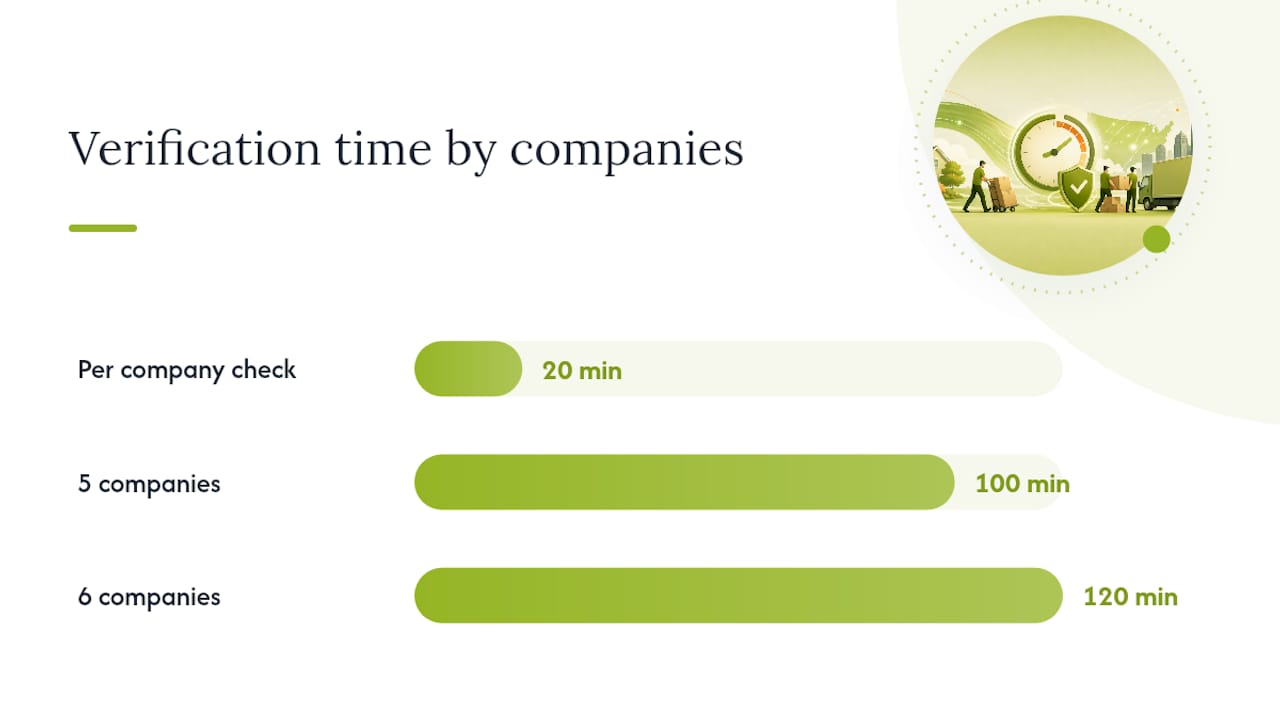
Running FMCSA and state checks yourself takes maybe twenty minutes per company. Running them across five or six companies while also comparing quotes, reading contracts, and chasing down COIs takes an afternoon most people don't have during a move.
Valueaddedmoving pre-screens its network of moving companies before a customer ever gets matched with one, confirming registration status and insurance documentation as a condition of inclusion rather than something a customer has to chase down after the fact. That screening layer is why the company reports a high customer satisfaction rate across thousands of reviews, since most complaints in this industry trace back to a mover nobody verified in the first place.
What a broker handles on your behalf typically includes:
- Confirming the mover's USDOT or state license is active before matching you
- Negotiating competitive quotes so you're not comparing an inflated bid against a lowball one
- Coordinating the move timeline so you have a single point of contact instead of chasing a dispatcher
- Flagging specialty needs upfront, whether that's pet relocation, professional packing, or a tight delivery window
The scope stays transparent throughout: Valueaddedmoving connects you with the mover and negotiates on your behalf, but the moving company you're matched with performs the actual move under its own registration and insurance. You can see the full process laid out in how Valueaddedmoving works.
When Should You Walk Away From a Mover?
My rule of thumb: if a company hesitates on the USDOT number question for more than a beat, that hesitation is the answer. Legitimate movers rattle off their number without thinking about it.
Escalate to your state consumer protection office or FMCSA's complaint system the moment a mover asks for cash upfront with no receipt. I've seen this exact pattern precede a hostage-load situation, where belongings get held until the customer pays more than quoted. One canceled contract at the estimate stage beats one filed complaint after delivery.
— Victor
Get Matched With Pre-Screened, Licensed Movers
Skip the afternoon of USDOT lookups and COI requests. Some brokers pre-screen moving companies for active registration and insurance documentation before matching customers, reducing the legwork needed from you.
That verification layer is the entire difference between comparing quotes on your own and having someone confirm the paperwork before you ever sign a contract. Request a free quote through Valueaddedmoving's long-distance moving services, and you'll get matched with vetted movers along with a negotiated price and a dedicated coordinator who handles logistics from booking through delivery. If you want to see the comparison criteria first, the long-distance moving company guide breaks down what separates a solid mover from a risky one before you ever request a quote.
Where to Verify Movers and File Complaints
Bookmark these before your move date:
- FMCSA mover search for USDOT registration and complaint history
- SAFER/Company Snapshot for safety and inspection records
- Your state's household goods or motor carrier licensing bureau for intrastate moves
- USA.gov or your state consumer protection office to file a complaint
Sources
FAQ
How Can You Tell if a Moving Company Is Insured?
Ask for a Certificate of Insurance that names the insurer, policy limits, and effective dates, not just a verbal claim of being "fully insured." A real COI will hold up to a direct call to the insurer if you want extra confirmation.
What Is the Most Trusted Way to Find a Legitimate Mover?
Cross-check the company's USDOT or state license number against the FMCSA mover database or your state's licensing site, then confirm a written estimate and COI before booking. Using a pre-screening broker adds another layer, as registration and insurance may be confirmed before you are matched with a moving company.
Should a Moving Company Be Insured?
Yes. Movers should carry cargo liability, general liability, and workers' compensation coverage, and you're entitled to see proof of each through a COI before you sign anything.
How Do You Know if a Mover Is Legitimate?
A legitimate mover has an active USDOT or state license, provides a written estimate based on an actual inspection of your belongings, and hands over a Bill of Lading and COI without hesitation. Refusal on any of those points is the clearest sign to keep looking.